Every parent wants their child to do well in school. However, wanting to succeed and knowing how to study are two very different things. Many kids sit at their desks for hours yet still struggle to remember what they learned. The good news is that memory and recall are skills. Like any skill, they can be improved with the right habits and techniques.
This article shares the best study tips for kids to improve memory and recall skills. These tips are simple, practical, and backed by how the brain actually works.
Why Memory and Recall Matter in Learning
Before diving into the tips, it helps to understand why memory matters. When kids learn something new, their brain stores it in short-term memory first. For that information to stick, it needs to move into long-term memory. That transfer does not happen automatically. It requires effort, repetition, and the right conditions.
Recall is the ability to retrieve stored information when needed. Strong recall helps kids perform better on tests, participate in class, and apply what they learn in real life. Therefore, building both memory and recall should be a key goal in every child’s study routine.
Create a Consistent Study Schedule
One of the most effective study tips for kids is to study at the same time every day. The brain thrives on routine. When kids study at a consistent time, their brain starts to prepare for learning at that hour. This makes it easier to focus and absorb information.
Short, regular sessions work better than long, irregular ones. For example, studying for 30 minutes each evening is more effective than cramming for three hours on a Sunday. Additionally, spreading study sessions across several days helps information move into long-term memory much more reliably.
Use the Power of Repetition
Repetition is one of the oldest and most proven memory techniques. When kids review material more than once, the brain strengthens the connections related to that information. This process is known as the spacing effect.
Instead of reading a chapter once, encourage kids to review it after one day, then again after three days, and once more after a week. This spaced repetition method greatly improves long-term recall. Flashcards are a great tool for this. Kids can flip through them regularly and focus more time on the cards they find difficult.
Teach Kids to Summarize in Their Own Words
Reading a textbook is passive. Writing a summary in their own words forces kids to actively process the information. This simple switch makes a huge difference in how well they remember content.
After reading a section, ask your child to close the book and explain what they just learned. This technique is called the Feynman Method. If they struggle to explain something clearly, it shows them exactly what they need to review. Therefore, this approach builds both understanding and memory at the same time.
Make Learning Visual
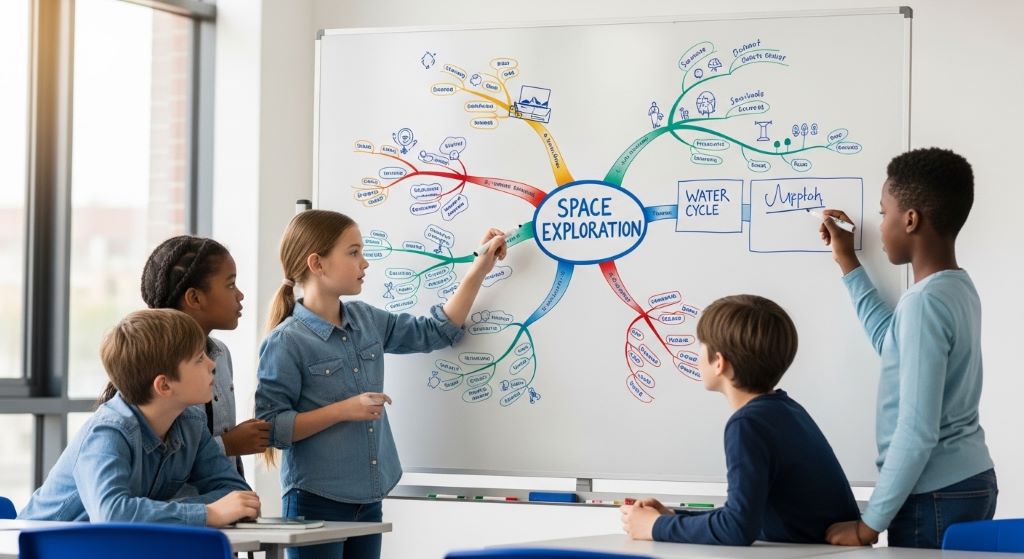
The brain is highly visual. Many kids remember pictures, diagrams, and colors far better than plain text. Encouraging kids to draw simple sketches, create mind maps, or use color-coded notes can significantly boost recall.
For instance, when studying the water cycle, a child who draws and labels the diagram will likely remember it far longer than one who only reads about it. Additionally, using different colors for different topics helps the brain organize and retrieve information more easily.
Encourage Active Recall Over Passive Review
There is a big difference between reading notes and testing yourself on them. Active recall means trying to remember information without looking at it. This is one of the most powerful memory tools available.
Kids can practice active recall by covering their notes and trying to write down everything they remember. They can also use practice questions, take mini quizzes, or have a parent ask them questions after a study session. Research consistently shows that testing yourself is more effective than re-reading. However, many kids default to re-reading because it feels easier. Helping them shift to active recall can transform their results.
Use Mnemonics and Memory Tricks
Mnemonics are creative tools that help the brain store and retrieve information. They work by linking new information to something already familiar.
For example, kids learning the order of planets can use the phrase “My Very Enthusiastic Mother Just Served Us Nachos” to remember Mercury, Venus, Earth, Mars, Jupiter, Saturn, Uranus, and Neptune. Similarly, rhymes, acronyms, and visual associations all help make abstract facts more memorable.
Encourage kids to create their own memory tricks whenever possible. When they invent the connection themselves, it becomes even more personal and easier to recall later.
Prioritize Quality Sleep
Sleep plays a critical role in memory. During sleep, the brain processes and consolidates everything it learned during the day. Without enough sleep, kids simply cannot form strong memories, no matter how hard they study.
School-age children need between 9 and 11 hours of sleep each night. Therefore, creating a consistent bedtime routine is just as important as creating a study routine. Avoid screens before bed, as the blue light from devices disrupts sleep quality. A well-rested brain is always more ready to learn, focus, and remember.
Keep the Study Environment Distraction-Free
The environment where kids study has a direct impact on how much they remember. A noisy, cluttered, or distraction-filled space makes it hard for the brain to focus and encode new information.
Set up a dedicated study space that is clean, quiet, and well-lit. All devices should be put away unless they are needed for the task. Background music without lyrics can sometimes help some kids focus, but this varies from child to child. However, TV and social media should always be off during study time.
Incorporate Movement and Breaks
Sitting still for long periods actually reduces concentration and memory retention. The brain needs short breaks to reset and process information. The Pomodoro Technique is a useful method for kids. It involves studying for 25 minutes, followed by a 5-minute break.
Additionally, physical activity boosts brain function. A short walk, some jumping jacks, or even just stretching between study sessions increases blood flow to the brain. This helps kids return to their work feeling refreshed and more focused.
Connect New Information to What Kids Already Know
The brain does not store information in isolation. It connects new facts to existing knowledge. Therefore, helping kids make connections between what they are learning and what they already know strengthens memory significantly.
For example, if a child is learning about ancient Egypt and has already seen a documentary about mummies, encourage them to connect those two things. Ask questions like “How does this remind you of something you already know?” These connections act like mental hooks that make recall much easier.
Stay Hydrated and Eat Brain-Boosting Foods
Good nutrition and hydration have a direct effect on how well kids can think and remember. Dehydration, even mild, reduces focus and cognitive performance. Encourage kids to drink water before and during study sessions.
Foods rich in omega-3 fatty acids, such as fish, walnuts, and flaxseeds, support brain health. Berries, leafy greens, and eggs are also excellent for memory and concentration. Avoid heavy, sugary snacks before studying, as these can cause energy crashes that make it hard to focus.
Practice Mindfulness and Reduce Study Stress
Stress and anxiety are major obstacles to memory. When kids feel anxious, the brain goes into survival mode and struggles to store new information. Therefore, managing stress is an important part of improving recall.
Simple breathing exercises can help kids calm down before studying. Encourage them to take three slow, deep breaths before they begin. Positive self-talk also matters. Instead of saying “I can never remember this,” teach kids to say “I am still learning, and I will get better.” This small shift in mindset can make a meaningful difference over time.
Conclusion
Improving memory and recall does not require expensive tools or complicated programs. It requires consistent habits, a supportive environment, and the right study strategies. By creating a regular schedule, using active recall, getting enough sleep, and connecting new information to existing knowledge, kids can significantly improve how well they learn and retain information.
Start with one or two tips and build from there. Over time, these small changes add up to big results. Every child has the potential to become a confident and capable learner. The right study habits simply help them unlock it.
Frequently Asked Questions
At what age should kids start learning good study habits?
Children can begin learning basic study habits as early as age 6 or 7. Simple routines like reading daily, reviewing new words, and practicing recall through questions are great starting points for young learners.
How long should a child study each day?
The ideal study time depends on the child’s age. Younger kids (ages 6 to 8) do well with 20 to 30 minutes per day. Older kids (ages 9 to 12) can handle 45 minutes to an hour. Teens can manage up to 90 minutes, broken into focused sessions with breaks.
What is the most effective memory technique for kids?
Active recall and spaced repetition are among the most effective techniques. Testing children on what they have learned, rather than just having them re-read notes, leads to much stronger long-term memory.
Does listening to music help kids study and remember better?
For some kids, soft instrumental music can improve focus. However, music with lyrics tends to distract rather than help. It varies by child, so experiment to see what works best for your specific learner.
How can parents help kids improve their memory at home?
Parents can help by asking their children to explain what they learned each day, playing memory games, reading together, encouraging healthy sleep and nutrition, and creating a calm, consistent study environment at home.
Related Topics:
How can parents support a child with dyscalculia in math?
How to Improve Focus in a Noisy Environment: Proven Strategies for Better Concentration