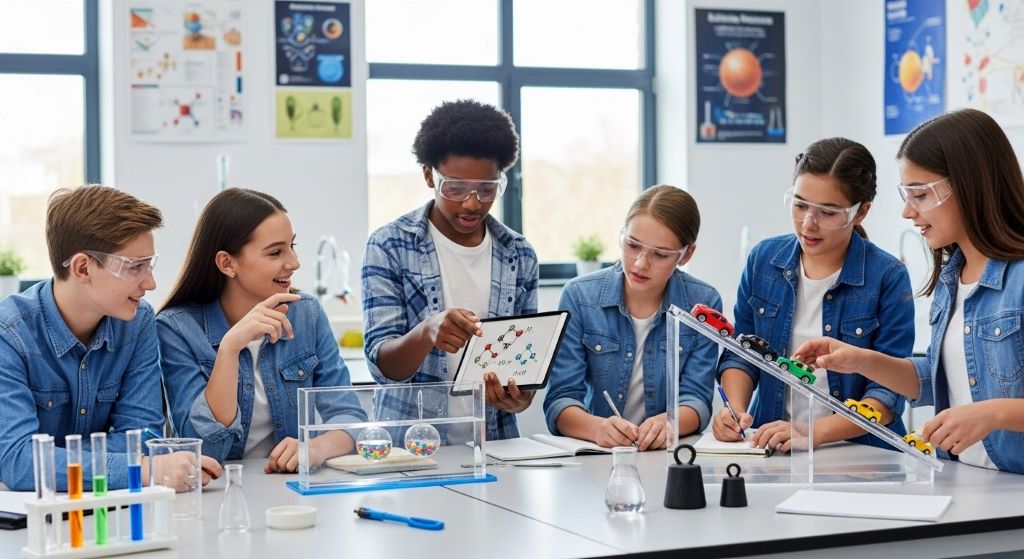
Modern education relies too heavily on memorization instead of genuine understanding. Students cram facts for tests only to forget information weeks later. This approach fails to develop critical thinking skills needed for real-world problem-solving and lifelong learning.
Reducing memorization dependency creates deeper learning experiences. Students who understand concepts can apply knowledge in new situations and retain information longer. However, shifting from memorization-based teaching requires intentional changes in curriculum design, assessment methods, and classroom practices.
Understanding the Problem with Memorization-Based Learning
Memorization serves as the lowest level of cognitive engagement. Students simply store information temporarily without processing meaning or connections. Therefore, memorized facts disappear quickly after assessments end.
Rote learning prevents transfer of knowledge to new contexts. A student who memorizes the Pythagorean theorem formula might struggle to recognize when to apply it in real situations. Additionally, memorization-focused education discourages curiosity and independent thinking.
The brain retains information better through understanding and application. When students connect new knowledge to existing understanding, neural pathways strengthen. Moreover, hands-on experiences and problem-solving create lasting memories that simple repetition cannot achieve.
Testing culture drives excessive memorization. High-stakes assessments often reward fact recall over conceptual understanding. Consequently, teachers feel pressured to cover material superficially rather than exploring topics deeply.
Redesigning Curriculum for Conceptual Understanding
Curriculum redesign begins with prioritizing depth over breadth. Covering fewer topics thoroughly proves more valuable than superficial exposure to many subjects. Therefore, educators must identify essential concepts worth deep exploration.
Organize content around big ideas and enduring understandings. Instead of teaching isolated facts, structure units around central questions and themes. Additionally, show connections between topics within and across subject areas.
Integrate interdisciplinary approaches connecting multiple subjects. Real-world problems rarely fit neatly into single disciplines. Moreover, cross-curricular projects help students see practical applications of knowledge.
Build curriculum spirally, revisiting concepts with increasing complexity. Students encounter ideas multiple times in different contexts, deepening understanding progressively. Furthermore, spiral design naturally reinforces learning without requiring deliberate memorization.
Reduce content standards to manageable numbers focusing on transferable skills. Overloaded curriculum forces teachers to rush through material, encouraging memorization. However, thoughtful selection allows time for exploration and application.
Implementing Project-Based and Inquiry Learning
Project-based learning engages students in authentic, complex challenges. Students must research, analyze, create, and present solutions requiring deep understanding. Therefore, superficial memorization proves insufficient for successful project completion.
Design projects addressing real community problems or authentic scenarios. Students investigating local water quality learn chemistry, biology, and environmental science through meaningful application. Additionally, real-world connections motivate engagement beyond grade incentives.
Inquiry-based approaches position students as active investigators. Teachers pose questions rather than delivering answers, guiding students through discovery processes. Moreover, inquiry naturally develops research skills and intellectual curiosity.
Structure projects requiring multiple knowledge applications. Students cannot simply recall facts but must synthesize information from various sources. Furthermore, collaborative projects encourage peer teaching, which deepens individual understanding.
Provide scaffolding without removing cognitive challenge. Teachers support students through complex work while maintaining productive struggle. However, excessive help reduces learning opportunities and recreates dependency.
According to Edutopia, research consistently shows project-based learning improves long-term retention and develops critical thinking skills better than traditional memorization-focused instruction.
Transforming Assessment Practices
Assessment drives learning behavior more than any other educational factor. Tests emphasizing fact recall encourage memorization regardless of other instructional approaches. Therefore, assessment transformation proves essential for reducing memorization dependency.
Replace multiple-choice tests with performance-based assessments. Require students to demonstrate understanding through essays, presentations, demonstrations, or creative products. Additionally, performance tasks reveal depth of comprehension that fact-recall tests miss.
Design open-book and open-note assessments focusing on application and analysis. When students can reference materials, tests must evaluate higher-order thinking. Moreover, this approach mirrors real-world scenarios where information access matters less than knowing how to use it.
Implement portfolios showcasing learning progression over time. Students curate work samples demonstrating skill development and conceptual growth. Furthermore, portfolio reflection deepens metacognitive awareness about personal learning.
Use rubrics emphasizing understanding over accuracy alone. Assess explanation quality, reasoning processes, and application ability. However, maintain appropriate rigor while shifting evaluation criteria.
Incorporate student self-assessment and peer evaluation. These practices develop critical thinking about quality and deepen understanding of learning objectives. Additionally, students internalize standards rather than simply following external requirements.
Encouraging Critical Thinking and Analysis
Critical thinking skills develop through deliberate practice and explicit instruction. Students need structured opportunities to analyze, evaluate, and synthesize information. Therefore, teachers must intentionally create thinking-rich classroom environments.
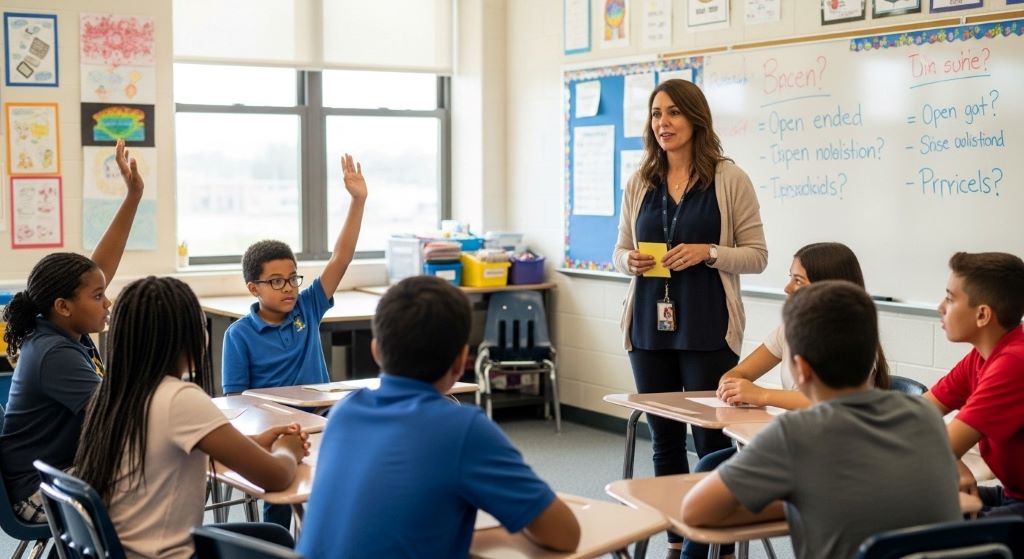
Use Socratic questioning to push beyond surface-level responses. Ask students to explain reasoning, provide evidence, and consider alternative perspectives. Additionally, questioning techniques model analytical thinking processes.
Teach argument construction and evidence evaluation. Students learn to distinguish strong reasoning from weak claims and identify logical fallacies. Moreover, these skills apply across all academic disciplines and life situations.
Present controversial topics requiring students to examine multiple viewpoints. Structured debates and perspective-taking activities develop analytical skills. However, maintain safe classroom environments where diverse opinions receive respectful consideration.
Incorporate think-pair-share and collaborative reasoning activities. Students articulate thoughts to partners before sharing with larger groups. Furthermore, peer discussion reveals thinking gaps and strengthens understanding through explanation.
Provide explicit instruction in thinking strategies and metacognition. Students benefit from learning how to approach complex problems systematically. Additionally, thinking about their own thinking improves learning efficiency.
Integrating Technology for Deeper Learning
Technology enables learning experiences impossible through traditional methods. Digital tools provide access to vast information requiring evaluation and synthesis skills. Therefore, thoughtful technology integration supports reduced memorization dependency.
Use simulations and virtual labs allowing safe experimentation. Students explore cause-and-effect relationships through interactive experiences. Additionally, simulations enable repeated trials supporting conceptual understanding development.
Leverage digital research tools teaching information literacy. Students must evaluate source credibility, synthesize multiple perspectives, and create original analyses. Moreover, research skills prove more valuable than memorized facts in information-rich environments.
Implement collaborative platforms supporting group problem-solving. Digital tools enable students to work together asynchronously and share thinking processes. Furthermore, collaborative technologies mirror modern workplace practices.
Create multimedia presentations requiring synthesis and communication skills. Students transform understanding into various formats, deepening learning through creation. However, avoid technology use that simply digitizes memorization-based approaches.
Utilize adaptive learning platforms providing personalized practice. These systems identify knowledge gaps and adjust difficulty appropriately. Additionally, immediate feedback supports self-correction without teacher intervention.
Developing Real-World Connections and Applications
Authentic learning contexts reduce memorization dependency by making knowledge purposeful. Students understand why they’re learning when connections to real life seem clear. Therefore, teachers should consistently highlight practical applications.
Invite community experts to share how they use academic concepts professionally. Guest speakers demonstrate real-world relevance and career connections. Additionally, expert interactions inspire students beyond textbook limitations.
Organize field experiences connecting classroom learning to authentic settings. Museum visits, nature studies, and workplace tours provide concrete contexts for abstract concepts. Moreover, experiential learning creates memorable associations supporting retention.
Design service-learning projects addressing genuine community needs. Students apply academic skills while contributing meaningfully to society. Furthermore, service experiences develop empathy alongside intellectual growth.
Use case studies from current events and real situations. Analyzing authentic scenarios requires applying knowledge rather than recalling isolated facts. However, select cases appropriate for student maturity levels.
Encourage students to pursue passion projects within academic frameworks. Personal interest drives deeper engagement than external requirements alone. Additionally, choice increases motivation and ownership of learning.
Training Teachers in Alternative Instructional Methods
Teachers trained in traditional methods need professional development supporting pedagogical shifts. Reducing memorization dependency requires new teaching skills and mindsets. Therefore, comprehensive training proves essential for successful implementation.
Provide workshops on inquiry-based facilitation techniques. Teachers learn to guide discovery without simply giving answers. Additionally, practice sessions build confidence in new approaches before classroom implementation.
Offer ongoing coaching and classroom observation support. Instructional coaches help teachers refine questioning techniques and activity design. Moreover, non-evaluative feedback encourages experimentation and growth.
Create professional learning communities where teachers collaborate. Sharing experiences, resources, and challenges builds collective expertise. Furthermore, peer support sustains change efforts beyond initial training.
According to The New York Times, effective teacher professional development focuses on practical classroom applications rather than theoretical presentations, with ongoing support proving crucial for lasting change.
Model desired teaching approaches during professional development. Teachers experience learning as students would, understanding methods from learner perspectives. Additionally, modeling demonstrates practical implementation strategies.
Allocate planning time for developing new materials and assessments. Creating conceptual learning experiences requires more preparation than lecture-based teaching. However, initial investment pays dividends through improved student outcomes.
Building Formative Assessment Into Daily Instruction
Formative assessment provides ongoing feedback guiding learning without grade pressure. This approach supports understanding development rather than memorization for tests. Therefore, frequent low-stakes assessment should replace infrequent high-stakes testing.
Implement entrance and exit tickets checking understanding. Brief prompts at lesson beginnings and endings reveal student thinking. Additionally, quick checks inform instructional adjustments before misconceptions solidify.
Use think-alouds where students verbalize reasoning processes. Articulating thoughts exposes understanding gaps and strengthens conceptual connections. Moreover, think-alouds help teachers identify where students struggle.
Incorporate frequent informal observations during independent and group work. Circulating and listening provides rich assessment data about understanding depth. Furthermore, informal checks enable immediate targeted support.
Design activities with built-in self-checking mechanisms. Students recognize errors independently and correct thinking without teacher intervention. However, ensure self-checks promote understanding rather than simple answer-getting.
Provide descriptive feedback focusing on thinking processes. Comments should guide improvement rather than simply marking right or wrong. Additionally, effective feedback identifies specific strengths and growth areas.
Creating Collaborative Learning Environments
Collaboration naturally reduces memorization dependency by requiring explanation and discussion. Students cannot hide behind memorized answers when peers ask for reasoning. Therefore, structured cooperative learning supports conceptual understanding.
Establish group norms emphasizing explanation and questioning. Students learn to ask “why” and “how” rather than accepting statements without justification. Additionally, productive discussion norms create safe thinking spaces.
Assign roles ensuring all group members contribute meaningfully. Rotating roles prevents some students from dominating while others disengage. Moreover, structured participation develops diverse skills.
Design tasks requiring genuine collaboration rather than divided labor. Students must negotiate meaning together, not simply combine individual work. Furthermore, authentic collaboration develops communication and teamwork skills.
Teach conflict resolution and perspective-taking skills. Disagreements about ideas drive deeper thinking when handled constructively. However, students need explicit instruction in respectful disagreement.
Use jigsaw activities where students become experts on subtopics. Teaching peers requires deep understanding beyond memorization. Additionally, peer teaching benefits both explainer and listener.
Conclusion
Reducing memorization dependency requires systemic changes across curriculum, assessment, instruction, and professional development. Prioritizing conceptual understanding over fact recall creates deeper learning preparing students for complex real-world challenges. Therefore, educators must redesign curricula around big ideas, implement project-based learning, transform assessment practices, and develop critical thinking skills. Additionally, technology integration, real-world connections, and collaborative environments support understanding-focused education. However, successful implementation requires comprehensive teacher training and ongoing support. Consequently, schools embracing these changes produce students who think critically, solve problems creatively, and retain knowledge long-term rather than memorizing temporarily for tests.
Frequently Asked Questions
Is memorization ever necessary in education?
Yes, some foundational knowledge requires memorization, such as basic math facts, phonics patterns, and essential vocabulary. However, memorization should serve as a foundation for understanding rather than the primary learning goal. Students need quick recall of fundamentals to engage in higher-order thinking.
How can standardized testing requirements be balanced with reducing memorization?
Schools can teach concepts deeply while ensuring students know required content. Understanding-based instruction often improves test performance since students can apply knowledge to varied question formats. Additionally, brief test preparation reviews can occur without making memorization the year-round focus.
What subjects benefit most from reducing memorization dependency?
All subjects benefit, though implementation varies. Science and mathematics naturally support conceptual learning through problem-solving and experimentation. History and literature develop through analysis and interpretation. Even subjects requiring factual knowledge improve when facts connect to broader understandings.
How do parents respond to reduced memorization in classrooms?
Parents may initially worry about changes from their own educational experiences. Clear communication explaining benefits and showing student work demonstrating deep understanding helps build support. Additionally, improved student engagement and retention often convince skeptical parents.
Does reducing memorization lower academic rigor?
No, understanding-based education typically increases rigor by requiring higher-order thinking. Analyzing, synthesizing, and applying knowledge proves more challenging than memorizing facts. Therefore, students work harder intellectually while enjoying learning more and retaining knowledge longer.
Related Topics:
How to design an IEP for ADHD?